















When Teachers Thrive, Children Flourish: The Case for Nurturing Educator Wellbeing
by Kiddy123.com . on 23/01/2026 ...
This article is written by Carolyn Choo. She is the Head of Department of Faculty of Education, Languages, Psychology & Music (SEGi University & Colleges), and President of Early Childhood Care & Education Council (Malaysia)
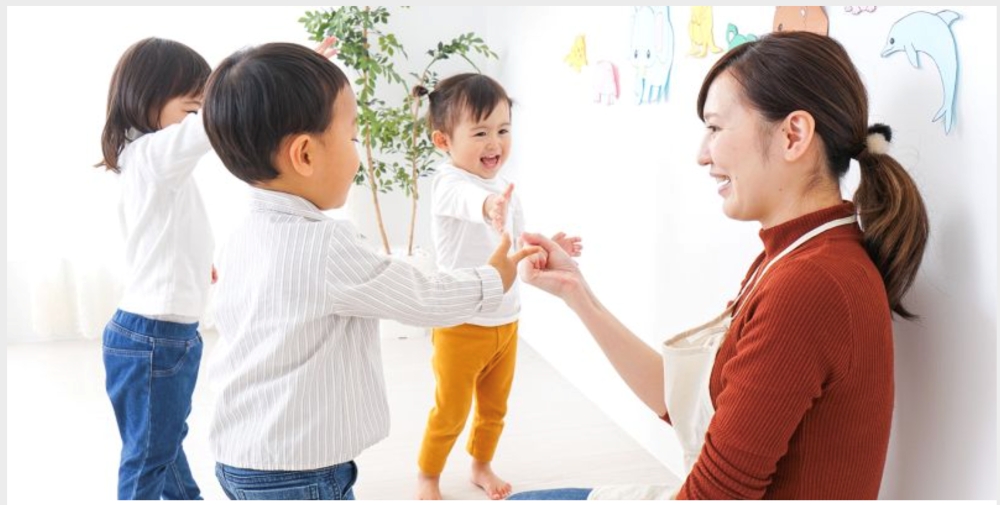
In every early childhood classroom, there’s an unseen heartbeat — the teacher. Her tone of voice, facial expression, and capacity for calm ripple across the room, shaping how children learn, relate, and grow. While policies, curricula, and resources often dominate discussions about quality education, it is the teacher’s emotional wellbeing that quietly anchors it all. This isn’t a private concern nor a luxury to be addressed after the “real work” is done — it is the real work.
Across decades of inquiry, research has remained consistent: emotionally healthy teachers are central to nurturing children’s development. When educators feel emotionally balanced, they tend to create warm, supportive classroom environments that encourage empathy and deeper learning (Jennings & Greenberg, 2009). Conversely, elevated stress levels among practitioners make it difficult for them to remain emotionally available and responsive to children’s needs, straining the adult-child relationship which can lead to increased behavioural challenges (Jeon et al., 2014; Kwon et al., 2019).
A systematic review by Dreer (2023) highlighted how teacher wellbeing not only fosters stronger relationships and job satisfaction but also contributes to children’s emotional regulation. Moreover, classrooms led by teachers with a positive emotional balance—rather than those experiencing burnout—tend to cultivate emotionally stable and well-adjusted children (Narea et al., 2022).
When teacher wellbeing becomes the norm, not the exception, something powerful can happen. The emotional climate a teacher brings into the classroom teaches children how to relate to themselves and others. In the early years, when the brain is most malleable and relationships most formative, emotional contagion — both positive and negative — shapes who children become. Children learn to name their emotions instead of acting them out. They discover that frustration can be managed, anger can be softened, and empathy can heal.
The recent tragedy involving a 16-year-old student stabbed by a 14-year-old schoolmate serves as a painful reminder of how social and emotional gaps, left unaddressed from young ages, can manifest in violent outcomes. While no single event can be traced to one cause, such incidents compel society to reflect on the preventive power of emotionally responsive early education.
Recognising the inseparable link between teacher wellbeing and children’s emotional development, UNESCO Bangkok developed the Asia-Pacific Early Childhood Care and Education Teacher Training Handbook for Social and Emotional Learning (APETT-SEL).

Among its four themes and ten modules, Theme 1: Self-Care for Teachers forms the foundation. It focuses on emotional regulation, mindfulness, empathy, and compassion — nurturing teachers who are calm, clear, and kind. A “calm” teacher responds rather than reacts, a “clear” teacher perceives with presence and focus, and a “kind” teacher radiates warmth that makes each child feel seen and safe. This framework affirms that the social and emotional learning of children begins with the social and emotional competence of teachers.
In Malaysia, SEGi University and Colleges has adopted the APETT-SEL framework, embedding its principles in teacher education, professional development, and community engagement. SEGi views teacher wellbeing as both an ethical responsibility and a driver of educational quality.
We have placed educator wellbeing at the heart of our professional preparation. Within SEGi’s Diploma in Early Childhood Education (DECE), the module Safety and Wellbeing in Early Childhood Education requires students to advocate for mental health among children and practitioners. This fosters reflection on policy, engagement with community projects, and the design of practical wellness strategies. Through this, future educators learn that caring for others begins with caring for self.
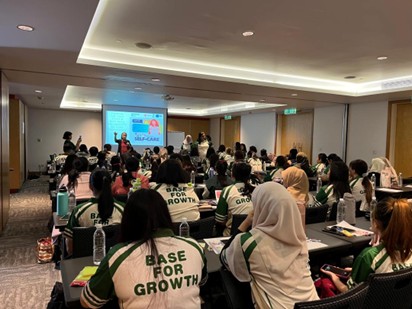
SEGi has also taken introduced APETT-SEL to the wider ECE community through a series of free self-care workshops for teachers and students alike. Yet, uptake of these free workshops has been slower than hoped. This may reflect the persistent mindset among educators that self-care is indulgent rather than essential. Many place children’s needs above their own or feel too time-strapped and emotionally depleted to attend. Ironically, these very conditions are what the workshops aim to alleviate. The challenge, then, lies not in awareness but in shifting the professional culture—toward seeing teacher self-care as an ethical responsibility to ensure sustained quality in early education.
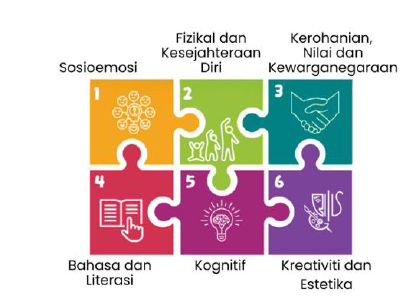
Malaysia’s Kurikulum Prasekolah 2026 marks an important step forward by placing Social-Emotional Development as the first learning area. Yet policy alone cannot shift culture. For these ideals to take root, teachers must themselves be nurtured to embody emotional balance and empathy.
To achieve this, national and institutional strategies must:
- Integrate SEL and mental health competencies into teacher training and continuous professional development.
- Provide supportive working conditions, manageable workloads, and access to counselling.
- Cultivate school cultures that value reflection, kindness, and community wellbeing as core indicators of quality education.
Such systemic investment will not only elevate the teaching profession but also reduce the societal cost of unaddressed stress and disconnection. When teachers model empathy and calmness, the next generation learns to express pain without violence and to seek understanding before judgment.
Every act of teaching is an act of giving. Yet no one can pour endlessly from an empty cup.
If we are to raise a generation of emotionally intelligent, compassionate, and resilient citizens, we must first ensure that those guiding them are emotionally grounded and well. SEGi’s adoption of the UNESCO APETT-SEL framework demonstrates how institutional vision can drive cultural transformation — where teacher wellbeing is recognised not as self-care alone, but as societal care.
In nurturing the nurturers, we nurture the nation itself.
References
- Dreer, B. (2023). On the outcomes of teacher wellbeing: A systematic review of research. Frontiers in Psychology, 14. Article 1205179.
- Jeon, L., Buettner, C. K., & Snyder, A. R. (2014). Pathways from teacher depression and child-care quality to child behavioral problems. Journal of Consulting and Clinical Psychology, 82(2), 225–235.
- Jennings, P. A., & Greenberg, M. T. (2009). The prosocial classroom: Teacher social and emotional competence in relation to student and classroom outcomes. Review of Educational Research, 79(1), 491–525.
- Kwon, K.-A., Ford, T. G., Jeon, L., Malek-Lasater, A., Ellis, N., Randall, K., & Kile, M. (2019). Early childhood teachers’ stress and children’s social, emotional, and behavioral functioning. Journal of Applied Developmental Psychology, 61, 21–32.
- Narea, M., Treviño, E., Caqueo-Urízar, A., Miranda, C., & Gutiérrez-Rioseco, J. (2022). Understanding the relationship between preschool teachers’ well-being, interaction quality and students’ well-being. Child Indicators Research, 15, 533–551.